
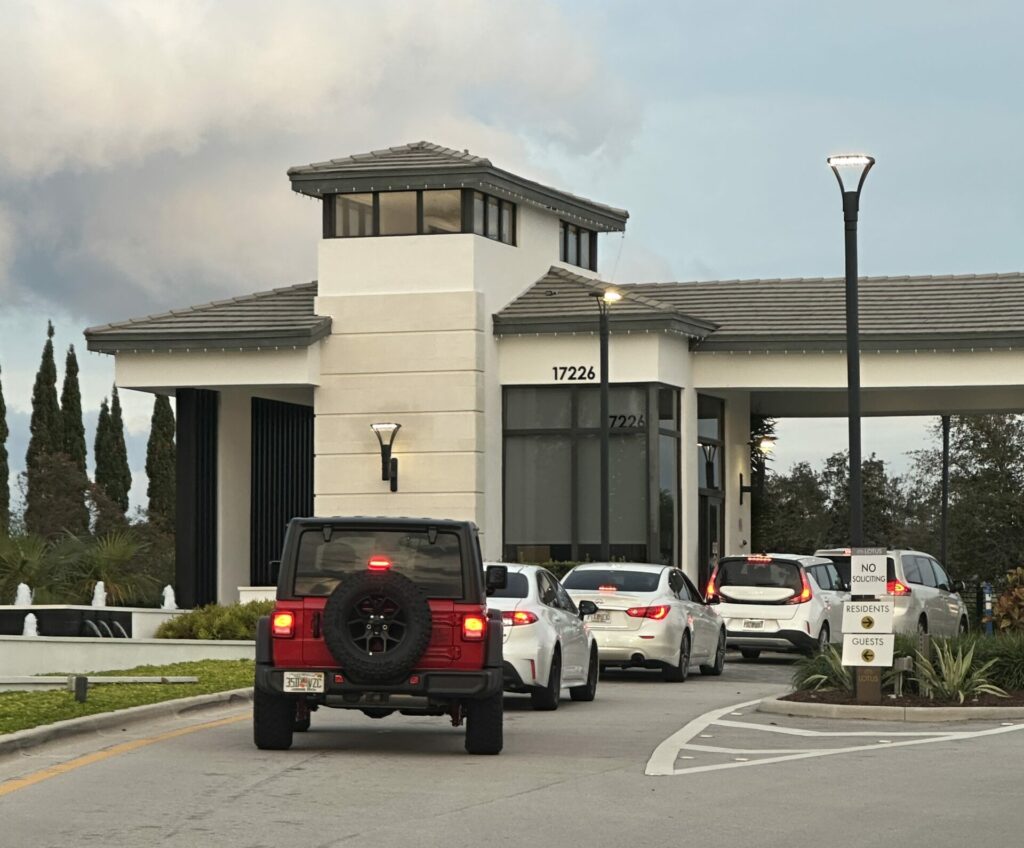
You’ve probably seen the newer telephone entry systems on the market. They have touchscreens, video intercoms, and apps that connect to your cell phone. These upgrades sound great on paper. But here’s what the brochures don’t tell you: no matter how fancy the callbox gets, your guests are still waiting in line.
Think about it. A visitor pulls up to your gate. There are four cars ahead of them. The first person has to scroll through the directory to find the right apartment number. The second person’s call goes to voicemail because the resident isn’t on their phone. The third person typed the wrong entry code and has to start over. Your guest? They’re sitting there with a valid invitation, watching the minutes tick by.
This is the fundamental problem with telephone entry systems. They create a bottleneck. Everyone has to take turns using the same device at the same location. It doesn’t matter if you have a PIN code, a QR code, or a golden ticket from Willy Wonka. You’re stuck behind whoever got there first.
The Supermarket Checkout Problem
Here’s an analogy that makes this crystal clear.
You run into the grocery store to grab milk and bread. Two items. You’ll be in and out in 30 seconds, right? But when you get to the checkout, there are three people ahead of you with overflowing carts. Now your 30-second transaction turns into a 15-minute wait.
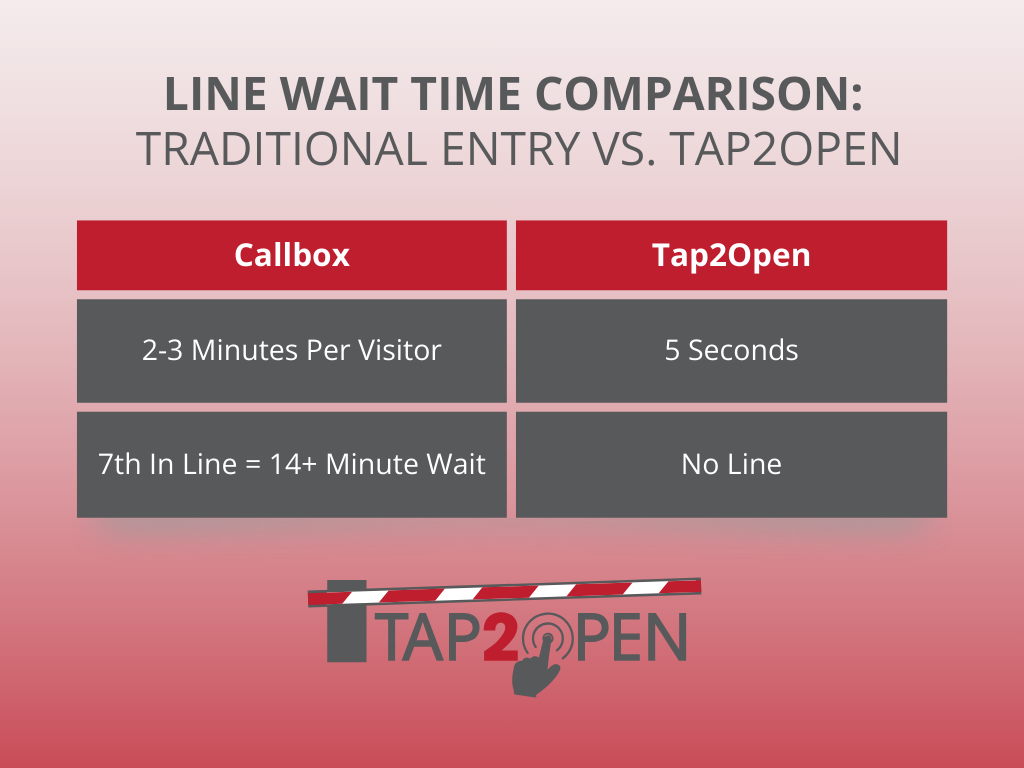
A telephone entry system works the same way. Maybe you can get through the gate in 10 seconds with your code. But the person in front of you doesn’t have a code. They need to call the resident, wait for an answer, explain who they are, and get buzzed in. That takes two or three minutes. Multiply that by a few cars, and suddenly you’re late for dinner.
Even the most advanced intercom system can’t solve this. Video intercoms, cellular connections, cloud-based directories… none of it matters when you’re seventh in line.
What Traditional Telephone Entry Systems Actually Do
Let’s back up and look at how these systems work.
A basic telephone entry system connects visitors to residents through a call button and keypad mounted at the gate. The visitor finds the resident in the directory, dials their number, and waits for an answer. If the resident picks up, they can press a button on their phone to send a signal to the gate operators.
Older systems relied on a dedicated phone line running to the callbox. When phone companies started phasing out landlines, many communities switched to cellular telephone entry systems that use cellular networks instead. This solved the connectivity problem but didn’t change the fundamental user experience.
Modern upgrades have added features like video intercom capabilities, mobile app integration, and web-based management. Some systems now work through an internet connection rather than a traditional telephone system. You can find options with stainless steel housings, touchscreen displays, and connections to cellular service providers.
These features are nice. Property managers can update directories from their office instead of driving to the gate. Residents can see who’s at the door on their mobile phone. The access control system logs every entry for security purposes.
But none of these improvements address the core issue: visitors still line up at the callbox and take turns.
The Real Cost of Waiting
Long lines at the gate aren’t just annoying. They create real problems for gated communities and apartment buildings.
Guests waiting in line create a hazard. In busy neighborhoods, the line of people waiting to use the callbox will back up onto a busy road. This creates a hazard and liability for the HOA.
Frustrated visitors leave. Delivery drivers on tight schedules will skip your community and mark the package as undeliverable. Service providers charge extra when they have to wait. Friends and family start dreading visits because of the hassle.
Visitors get stuck. Every surprise visitor means a phone call. Many times a resident won’t or can’t answer. And if they don’t answer? The visitor is stuck, and they’ll call again. And again. They don’t know what to do. Meanwhile, everyone waiting in line behind them has to wait longer!
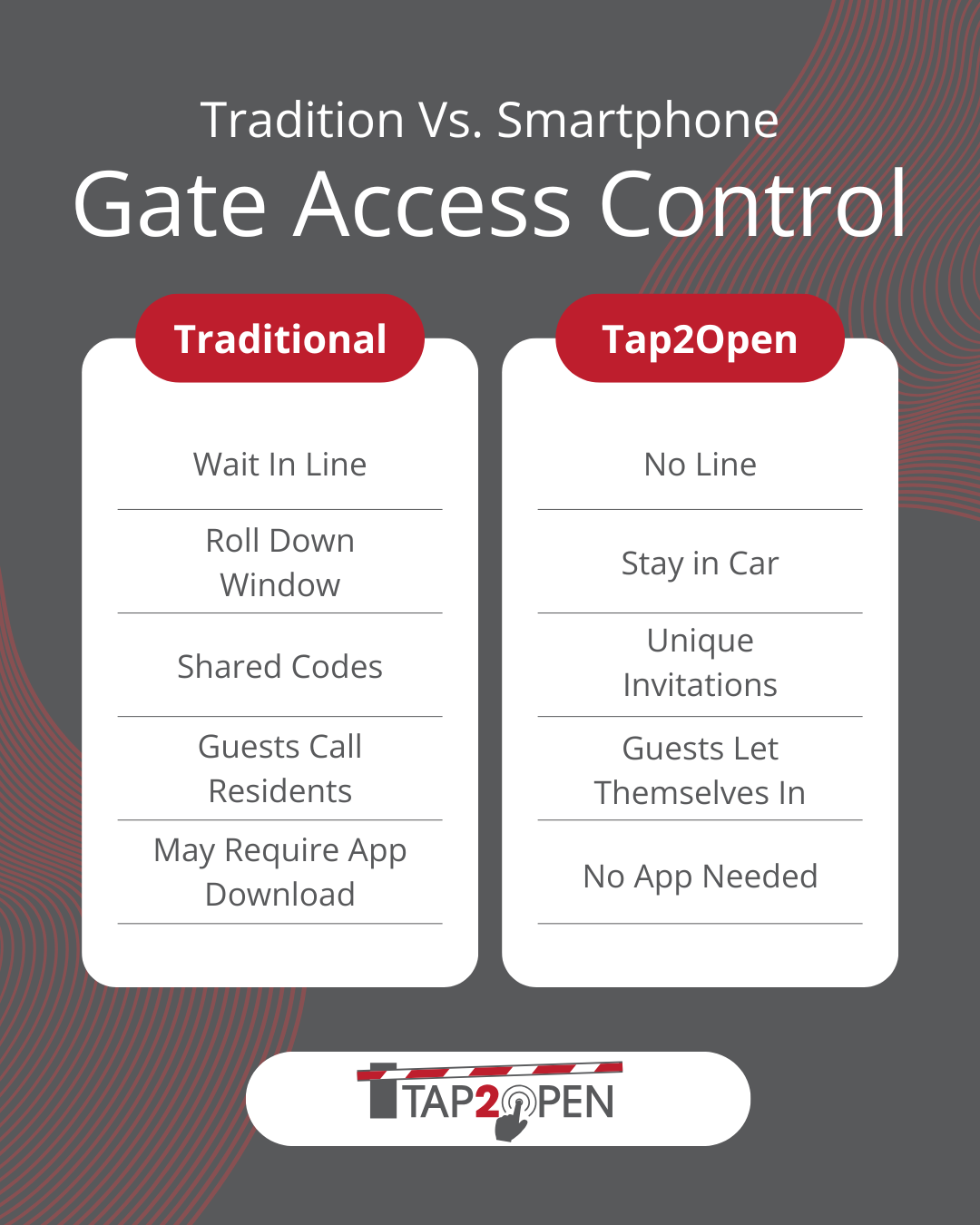
Security actually decreases. When lines get long, communities start sharing access codes to speed things up. “Just use 1234 to get in.” Over time, everyone knows the code, and your access control becomes meaningless.
Weather exposure creates liability. Visitors have to roll down their windows and reach out to the keypad. In rain, snow, or extreme heat, this is uncomfortable at best and dangerous at worst.
A Different Approach: Skip the Line Entirely
What if guests didn’t have to use the callbox at all?
That’s the idea behind Tap2Open. Instead of making visitors wait their turn at a telephone entry system, guests open the gate directly from their smartphone. No line. No waiting. No fumbling with a keypad in the rain.
Here’s how it works. A resident sends their guest an invitation by text or email. When the guest arrives, they tap a link on their phone, and the gate opens. The whole process takes about five seconds.
The guest doesn’t need to download a mobile app. They don’t need to call anyone. They don’t need to find a directory or enter a code. They just tap and drive through.
Because invited guests can open the gate themselves, they use the resident lane instead of waiting at the visitor entrance. This means they skip the line completely. And because fewer people are using the callbox, the line for everyone else gets shorter too.
The Bank vs. ATM Comparison
Think of it like the difference between going inside a bank and using the ATM.
If you need to deposit a check and talk to a teller, you have to wait in line. Maybe there are three people ahead of you, each with complicated transactions. Even though your simple deposit only takes 30 seconds, you spend 20 minutes in line because of everyone else.
But if you can use the ATM? You walk up, do your thing, and leave. No waiting for other people. No dependence on how fast the teller works.
Tap2Open turns your guests into ATM users. They handle their own access and move on. The callbox (the teller line) is still there for people who need it, but most of your visitors never touch it.
What About Security?
You might be wondering if letting guests open the gate themselves creates security risks. Actually, it improves security in several ways.
Every invitation is time-restricted. A guest can only access the community during the window the resident sets. After that, the link stops working. No more “permanent” guest codes floating around.
The system uses GPS validation to verify the guest is actually at the gate before allowing access. You can’t open the gate from across town.
Every entry is logged with details about who entered, when, and which resident invited them. If there’s ever an incident, you have a complete record.
And because each guest gets a unique invitation, there’s no code sharing. The security problems that come with traditional telephone entry systems disappear.
Works With What You Already Have
Switching to smartphone-based access doesn’t mean ripping out your existing infrastructure. Tap2Open works alongside your current gate operators, card access readers, RFID systems, and yes, even your callbox.
Communities can keep using barcodes, remotes, and keycards for residents who prefer them. The telephone entry system stays in place for visitors who don’t have smartphones or show up without an invitation. Everything works together through one access control system.
For apartment complexes with high turnover, this eliminates the hassle of collecting remotes and reprogramming access at move-out. For gated communities with lots of visitors, it dramatically reduces wait times without requiring a complete system overhaul.
The system also works at commercial buildings, office buildings, marinas, RV parks, and anywhere else that needs visitor access without the bottleneck of a traditional entry system.
What About Guests Without Smartphones?
Not everyone has a smartphone, and that’s fine. Tap2Open includes a keypad option for visitors who need it. But unlike traditional systems where everyone shares the same code, each guest gets a unique PIN that expires after their visit.
Delivery drivers, service providers, and other frequent visitors can get temporary codes tied to specific time windows. The code works when it’s supposed to and stops working when the visit is over.
For communities that want even more options, Tap2Open integrates with license plate cameras that recognize returning vehicles and open the gate automatically. Frequent guests get faster access while first-time visitors still have clear entry options.
Ready to Eliminate the Wait at Your Gate?
If your telephone entry system is creating long lines and frustrated visitors, there’s a better way. Tap2Open gives your guests the ability to open the gate themselves, skipping the callbox entirely while maintaining full security and access control.
The system works with your existing gate hardware, so you don’t need expensive infrastructure replacement. Installation is handled by local gate companies (or your current gate servicer) who know your equipment.
Contact Tap2Open to see how smartphone-based access can work for your community.
Phone: 561-740-6736 (Press 1 for sales)
Email: sales@tap2open.com
Website: about.tap2open.com
Schedule a consultation and find out how quick the upgrade process can be. Your residents and visitors will thank you for eliminating the wait.